The Patio Feels Bigger When the Route Stays Clear
A clear patio route makes the doorway and seating easier to use, helping a compact outdoor space feel more open without adding square footage.
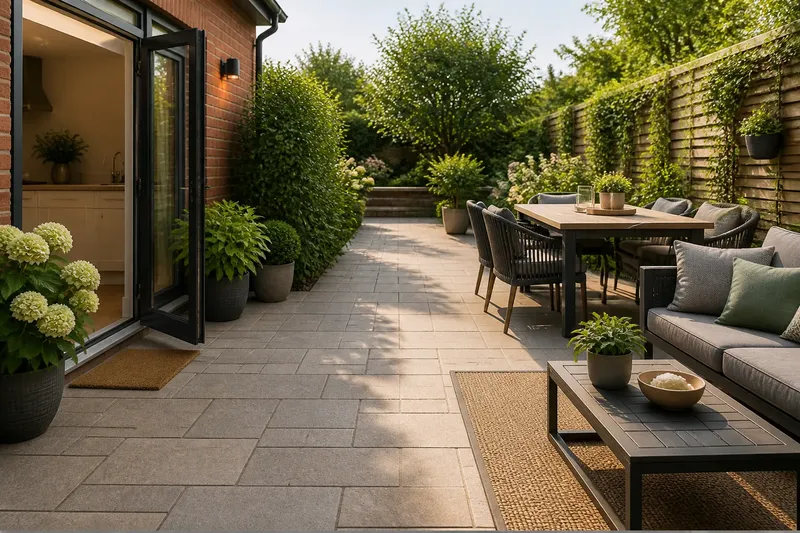
The common patio mistake is to arrange every chair and table around the edge, then leave the route from the doorway to the seating area to whatever space remains. The cost is a patio that feels cramped in use: people sidestep furniture, interrupt conversations and hesitate before carrying a tray outside. A clear walking route can make the same footprint feel more generous because movement becomes easy to read.
Why does a clear patio route make the space feel bigger?
A clear patio route makes the space feel bigger by giving the eye and the body an unobstructed way through it. When the path from the door to the main seating area is legible, you can enter without negotiating furniture and take in the arrangement as a whole, rather than noticing one obstacle after another.
This is not a matter of leaving a broad, empty strip across the paving. A route can curve gently around a table or pass beside a sofa. What matters is that it stays continuous, comfortable to walk and free of small obstructions such as a chair leg, plant saucer or low side table placed in the natural line of travel.
Think of the route as part of the layout, not as leftover space. The patio still holds furniture and useful objects; they simply sit beyond the path rather than in it. That distinction is especially helpful on narrow patios, where a slight shift in a chair can change the whole approach to the seating.
Where should the route run?
The route should connect the doorway with the place people are most likely to sit, while accounting for how they actually enter and leave. Start by observing the door’s swing, the direction people step after crossing the threshold and the most direct approach to the main seats. The obvious line may not be straight: a door opening beside a wall, for instance, can make a short curve more natural than a direct line through the furniture.
On a patio with more than one entrance, identify the route people use most often. A garden gate may be useful for access, but the back door may carry most of the everyday traffic. Keep the principal route easy to follow, then ensure secondary access does not require moving a chair or squeezing behind a bench.
Check the route from a seated person’s point of view as well. A chair placed where it is easy to reach can still obstruct someone walking behind it. When possible, let the walking line pass beside the seating group rather than cutting between a pair of chairs where people are talking.
Walk the route before deciding where the furniture belongs.
How wide should a patio route be?
A patio route should feel comfortable for the people and objects that use it, rather than follow a single fixed width. Consider whether someone needs to carry a watering can, tray or folded garden chair, and whether people need to pass one another. A route that works for an empty-handed walk may feel awkward when someone is carrying food outside.
Use an ordinary walk-through as a practical check. Open the door fully, walk to the main seating and turn as you would when setting down a drink. If you have to angle your shoulders, step around a protruding leg or pull a chair aside, the route needs adjustment. Leave room for the movement you expect, not just the outline of a person standing still.
For a compact patio, it may be more useful to keep one clear, continuous route than to create several narrow passages between pieces. A simple approach can make the layout easier to understand and reduce the need to shuffle furniture each time someone enters.
Which furniture causes bottlenecks?
Furniture causes bottlenecks when its working space overlaps the walking line. Dining chairs need to be pulled back; a bench may project beyond its frame when someone sits down; a low table can be hard to see while carrying a plate. Check the space in use, not only the empty arrangement.
Look closely at pieces nearest the doorway and at corners where people turn. A large planter, storage box or barbecue may seem harmless against a wall, but can narrow the turn into the seating area. If the route is pinched, try moving a secondary object before replacing the main furniture.
Imagine a patio where the back door opens beside a rectangular table and a chair sits directly in the natural line to a sofa. Moving that chair to the far side of the table, then shifting a small planter out of the turn, would leave the table in place while opening a more direct passage. The expected visible result is a route that can be walked without stopping or turning sideways.
When choosing between a compact furniture arrangement and a larger one, consider how often the route will be used and whether chairs can remain in position. A piece that needs constant repositioning may be less useful than a smaller option that leaves the everyday approach open.
What can mark the route without blocking it?
A route can be made clear through visual cues rather than barriers. The edge of a rug, a change in paving direction or a low boundary along one side can help suggest where to walk. Keep such cues consistent with the patio’s materials and ensure they do not introduce a raised edge or a loose surface underfoot.
Furniture can also define the route. Placing the seating group on one side and a narrow console or wall-mounted shelf on the other may make the passage apparent without turning it into a corridor. Avoid lining both edges with objects if that makes a small patio feel pinched.
Lighting can help the route remain legible after dusk. A wall light near the door or a suitable low-level fixture can make changes in direction easier to see. Choose outdoor-rated products and follow the manufacturer’s instructions; electrical work should be handled by a qualified professional where required.
How can the route work with dining?
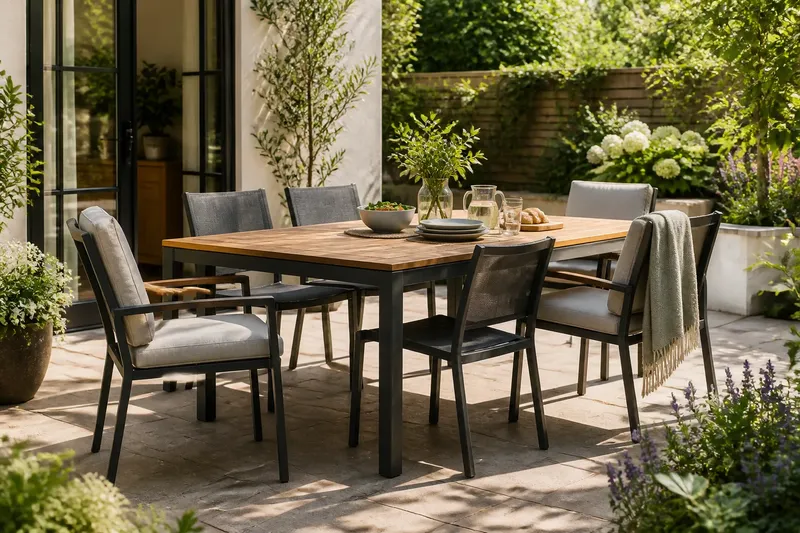
A dining area needs a route that remains usable when chairs are occupied or pulled back. If the only path to the main seats crosses behind diners, people may have to interrupt the meal to pass. Where possible, set the table so the approach runs along one side rather than between chairs and the table edge.
On a small patio, it can help to treat dining as an occasional arrangement. A table that can be moved or folded away may preserve a clear everyday route, provided it is easy to reposition and does not need to be dragged through the seating group. Decide where the table will stand when in use before settling the rest of the layout.
Keep the route useful for serving as well as walking. A clear approach from the door to the table makes carrying food simpler, while a separate path from the table to the main seating reduces crossings through the dining area. If the footprint cannot support both, prioritise the path used most often.
What if the doorway is awkward?
An awkward doorway may call for a route that bends around its constraints rather than forcing a straight line. A door that swings out, a step or a narrow opening can shape where furniture belongs. Leave the door’s movement unobstructed and make the first turn after the threshold as simple as the space allows.
For a patio entered through sliding doors, avoid placing a table or planter immediately in the most convenient exit point. If the usable opening sits at one end, align the walking route with that opening and place the main seating beyond it. Where there is a step, keep the landing area clear so a person can pause and orient themselves before turning.
If accessibility or mobility is a concern, the right route depends on the person’s needs and the door and surface conditions. A qualified access professional can advise on a particular home; as a general consideration, avoid loose obstacles and make changes in level easy to see.
How do you check the layout?
Check the layout by walking it in the situations the patio is meant to support. Try entering with a cup, approaching the seating while another person is standing nearby and moving a chair back from the table. These ordinary movements reveal obstructions that a view from indoors may miss.
Use temporary markers before shifting heavy items. A length of garden hose or removable tape can suggest the route’s edge; then walk through and assess whether the line feels natural. Keep markers off surfaces where they could leave residue, and remove anything that might become a trip hazard.
Make one adjustment at a time. Move a chair, repeat the walk and notice whether the turn is clearer. This helps distinguish a genuine improvement from a change that merely moves the obstruction to another part of the patio.
A clear patio route is not empty space for its own sake. It is the everyday connection between the home and the place you have arranged to sit. When that connection stays open, the furniture can remain inviting without making the patio feel like an obstacle course.